
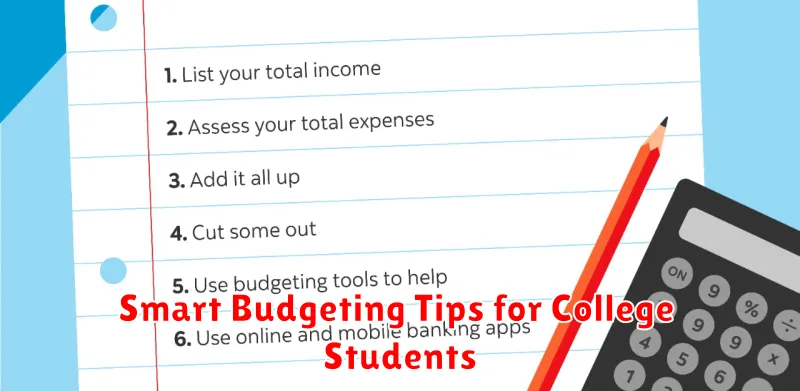
College life often presents students with their first taste of financial independence. Managing a limited budget while juggling academic demands and social activities can be challenging. Smart budgeting is crucial for college students to avoid debt, cover essential expenses, and build a strong financial foundation for the future. This article provides practical and effective budgeting tips tailored specifically to the unique needs of college students, helping them navigate the financial landscape of higher education and achieve their financial goals. Mastering smart budgeting is an investment in your future success.
From textbooks and tuition to housing and meal plans, the costs associated with college can quickly add up. Learning how to create and stick to a student budget is essential. This guide offers valuable insights into smart budgeting for college students, covering everything from tracking expenses and identifying areas to save to exploring student discounts and securing financial aid. These budgeting tips are designed to empower college students to take control of their finances and make informed decisions that will contribute to their overall well-being during and beyond their college years.
Understanding College Expenses
Managing finances effectively in college requires a clear understanding of all potential expenses. These costs can be broadly categorized into direct costs and indirect costs.
Direct Costs
Direct costs are billed directly by the institution and are often the most substantial expenses. These include tuition, fees, and often room and board if living on campus.
Indirect Costs
Indirect costs are expenses necessary for your education but not paid directly to the college. These are sometimes less obvious but equally important to budget for. They can include textbooks and supplies, transportation, personal expenses, and groceries (if living off-campus).
Accurately estimating and tracking both direct and indirect costs is crucial for creating a realistic budget and avoiding financial strain during your college years.
Creating a Monthly Budget
A monthly budget is your financial roadmap, helping you track income and expenses. It’s essential for managing your finances effectively.
Begin by calculating your total monthly income. Include all sources like part-time jobs, scholarships, grants, and financial aid from family.
Next, list all your expenses. Categorize them into fixed expenses (rent, tuition, loan payments) and variable expenses (groceries, entertainment, transportation).
Track your spending throughout the month. Use a budgeting app, spreadsheet, or notebook to monitor where your money goes. This will give you valuable insight into your spending habits.
Compare your income and expenses. If your expenses exceed your income, identify areas where you can reduce spending. Prioritize needs over wants.
Tracking Spending with Apps
Managing finances in college can be challenging. Fortunately, numerous budgeting apps can simplify the process. These apps provide a convenient way to monitor your spending and maintain a realistic budget. They allow you to connect your bank accounts and credit cards for automated tracking, eliminating manual entry.
Many apps categorize your expenses, providing a clear picture of where your money goes. This offers valuable insights into your spending habits. Some apps even offer personalized recommendations for saving based on your spending patterns.
Several popular choices include Mint, YNAB (You Need a Budget), and Personal Capital. Explore different options to find an app that aligns with your needs and preferences.
Saving on Textbooks and Supplies

Textbooks and supplies can be a significant expense for college students. However, with some savvy strategies, you can significantly reduce these costs. One of the most effective ways to save is by exploring alternatives to buying new textbooks. Consider renting textbooks, which is often considerably cheaper.
Purchasing used books is another excellent option. Check with your college bookstore or online marketplaces for used copies. Don’t overlook the potential of digital textbooks, which can sometimes be more affordable than print versions. Exploring free online resources, such as open educational resources (OER), can also help minimize textbook costs.
When it comes to supplies, planning is key. Create a list of necessary supplies before you start shopping to avoid impulse purchases. Compare prices at different retailers, both online and brick-and-mortar stores, to find the best deals. Consider buying supplies in bulk, especially frequently used items like pens and paper. Look for student discounts, which many retailers offer, and take advantage of back-to-school sales.
Avoiding Debt and Overspending
College life often presents numerous financial challenges. Avoiding debt and managing expenses wisely is crucial for a successful and less stressful college experience.
Create a Realistic Budget: Track your income and expenses meticulously. Distinguish between needs and wants. Prioritize essential expenses like tuition, rent, and groceries.
Limit Credit Card Use: Credit cards can be helpful for emergencies, but high interest rates can quickly lead to debt. If you do use a credit card, pay the balance in full each month.
Explore Student Discounts: Many businesses offer discounts to students. Take advantage of these opportunities to save on everything from software to movie tickets.
Consider a Part-Time Job: A part-time job can provide valuable income to help cover expenses and reduce reliance on loans or credit cards.
