
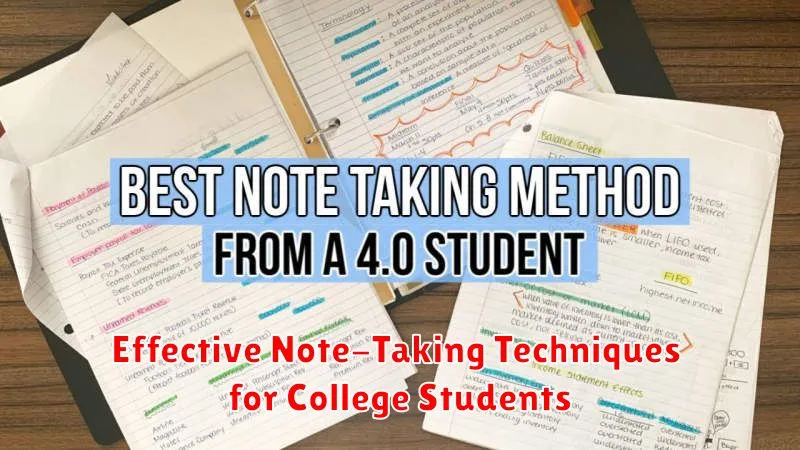
Note-taking is a crucial skill for college students. Developing effective note-taking techniques can significantly impact academic performance, comprehension, and retention of complex information. This article will explore various proven note-taking strategies designed to help college students effectively organize, synthesize, and recall information presented in lectures, readings, and research. Mastering these techniques can transform overwhelming amounts of information into manageable and readily accessible knowledge, leading to improved grades and a deeper understanding of course material.
From the Cornell Method to sketchnoting, and from digital note-taking to the use of mind maps, there’s a note-taking technique suited to every learning style. This article will provide a comprehensive guide to these effective note-taking techniques, offering practical tips and examples to help college students identify the methods that best align with their individual needs. Whether you’re struggling to keep up with lectures, looking to improve your study habits, or aiming to maximize your learning potential, this guide to effective note-taking will provide valuable insights and practical strategies for college success.
The Purpose of Note-Taking
Note-taking serves several critical purposes for college students. Primarily, it facilitates active listening and engagement during lectures and discussions. By actively processing information and summarizing it in your own words, you enhance comprehension and retention.
Secondly, notes act as a valuable study tool. They provide a condensed record of key concepts, facts, and arguments, making review and exam preparation more efficient. Well-organized notes can also aid in connecting different ideas and identifying knowledge gaps.
Finally, effective note-taking promotes critical thinking. The process of selecting, organizing, and summarizing information encourages deeper analysis and synthesis of material, leading to a more comprehensive understanding of the subject matter.
Choosing a Note-Taking System
Selecting the right note-taking system is crucial for effective learning. The best system is one that works for you, aligning with your learning style and the demands of your courses.
Several popular methods exist, each with its strengths and weaknesses. The linear method, involving sequential notes, is simple but can lack organization. The Cornell method divides the page into sections for notes, cues, and summaries, promoting active recall. Mind mapping visually connects ideas, ideal for brainstorming and creative subjects. Sketchnoting combines drawings and text, engaging different parts of the brain.
Consider the course content and your personal preferences when making your decision. A highly technical course might benefit from linear notes or the Cornell method, while a more conceptual course might lend itself to mind mapping or sketchnoting. Experiment with different approaches to find what helps you best retain and understand the material.
Using Digital Tools and Apps

Digital note-taking offers numerous advantages for college students. Apps and software provide features beyond basic typing, allowing for organization, searching, and accessibility across devices. Consider these benefits when choosing digital tools:
Organization: Digital tools often offer features like tagging, folders, and cloud storage, making it easier to organize notes by course, topic, or project.
Searchability: Locating specific information within your notes becomes significantly easier with digital search functionality. No more flipping through pages of handwritten notes.
Accessibility: Access your notes anytime, anywhere, from your laptop, tablet, or smartphone.
Some popular digital note-taking options include note-taking apps, software like Microsoft OneNote, and cloud-based document editors.
Organizing Notes for Easy Review
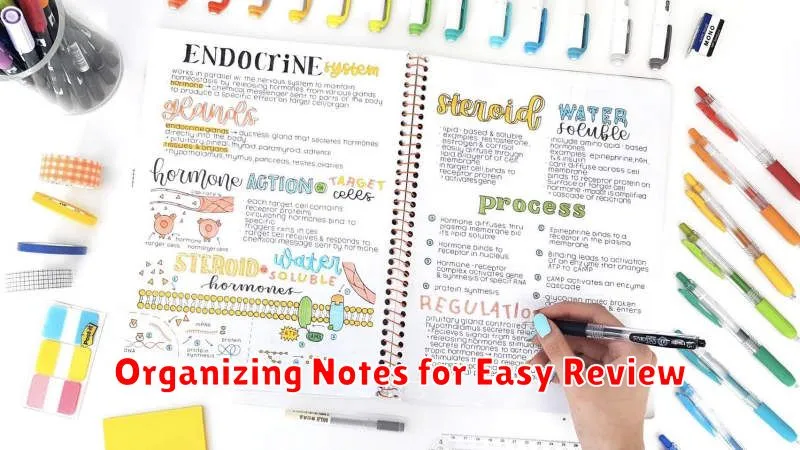
Effective note organization is crucial for easy review and retention. Consistent organization saves time and reduces stress when studying for exams.
Implement a system that works for you and stick with it throughout the semester. Some popular methods include:
- The Cornell Method: Divide your page into three sections: main notes, cues, and summary.
- Outlining: Use headings and subheadings to structure your notes in a hierarchical format.
- Mind Mapping: Visually represent connections between concepts using diagrams.
Regardless of the chosen method, date and title each set of notes clearly. This helps with quick retrieval and contextualization of the material.
Consider using color-coding to highlight key terms, concepts, and formulas. This visual cue can significantly aid recall during review sessions.
Reviewing Notes Strategically
Regular review is crucial for transferring information from short-term to long-term memory. Don’t wait until right before the exam. Instead, implement a spaced repetition schedule.
Start reviewing your notes within 24 hours of taking them. This initial review helps solidify the information. Then, revisit the material after a few days, a week, and then again closer to the exam. This reinforces learning and improves recall.
Active recall is more effective than simply rereading. Try to retrieve the information from memory without looking at your notes. Use techniques like summarizing key concepts from memory, creating flashcards, or teaching the material to someone else.
Connect new information to existing knowledge. Look for relationships between concepts and create a mental framework to organize the material. This helps deepen understanding and makes it easier to remember.
