
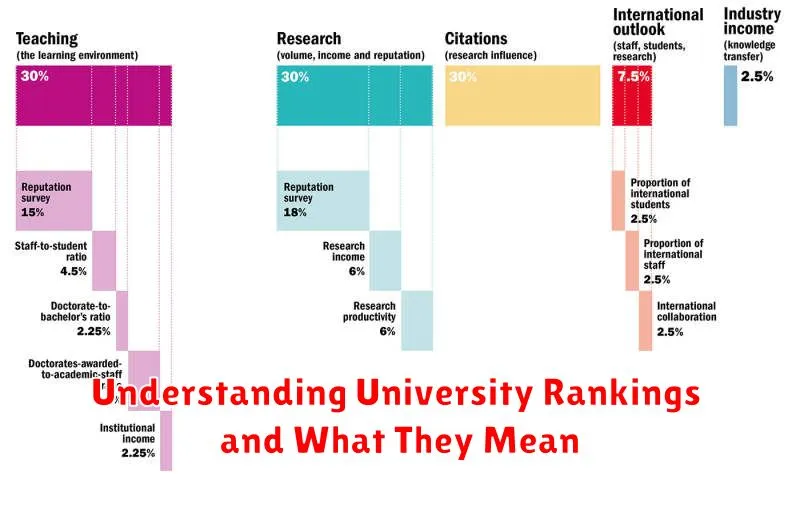
University rankings have become a ubiquitous factor in the higher education landscape. Prospective students often consult these rankings when making their college choices, while universities themselves use them as benchmarks for performance and prestige. Understanding university rankings, their methodologies, and their inherent limitations is crucial for both students and institutions to appropriately interpret their significance. This exploration delves into the prominent ranking systems, highlighting the criteria they employ and the weight assigned to each factor, such as academic reputation, research output, faculty-student ratio, and internationalization.
Navigating the complex world of higher education requires careful consideration of multiple factors, and university rankings are undoubtedly a prominent element in this process. However, relying solely on rankings can be misleading. This article aims to provide a comprehensive guide to understanding university rankings and what they truly mean, emphasizing the importance of looking beyond the numerical value assigned to each institution. By understanding the methodologies and acknowledging the limitations, readers can gain valuable insights into the strengths and weaknesses of various ranking systems and, ultimately, make more informed decisions about their educational pursuits.
What Are University Rankings?
University rankings are comparative assessments of universities worldwide based on various performance indicators. These rankings aim to provide a standardized measure of institutional quality, helping prospective students, academics, and other stakeholders make informed decisions.
Methodologies vary across different ranking organizations. Some emphasize research output and citations, while others prioritize teaching quality, student satisfaction, or internationalization. These differences lead to varied results, and it’s crucial to understand each ranking’s criteria before drawing conclusions.
Common factors considered include academic reputation, faculty expertise, student-to-faculty ratios, research funding, and graduate employability. Rankings typically assign scores to each university based on these factors and then present them in a list format, often divided into global and subject-specific rankings.
Different Ranking Systems
Various organizations employ different methodologies to rank universities. Understanding these differences is crucial for interpreting the rankings effectively. No single ranking system is universally accepted as the “best.”
Some prominent ranking systems include:
- Times Higher Education World University Rankings: This system emphasizes teaching, research, citations, international outlook, and industry income.
- QS World University Rankings: QS focuses on academic reputation, employer reputation, faculty/student ratio, citations per faculty, and international student and faculty ratios.
- Academic Ranking of World Universities (ARWU): Also known as the Shanghai Ranking, ARWU prioritizes research output, highly cited researchers, publications in Nature and Science, and Nobel Prizes and Fields Medals.
- U.S. News & World Report Best Global Universities Rankings: This ranking considers global and regional research reputation, publications, books, conferences, and international collaboration.
Each ranking system uses its own weighting for these indicators, leading to variations in the final results. It’s important to consider these differences when comparing rankings across different providers.
Key Metrics and Criteria
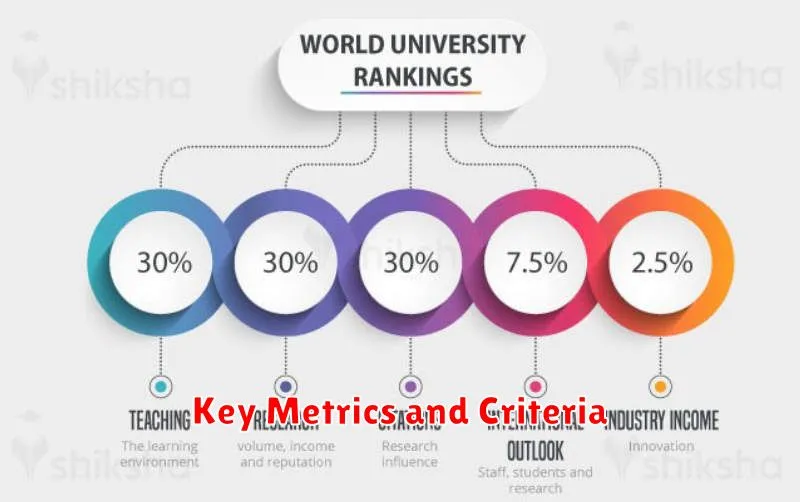
University rankings employ a variety of metrics to assess institutional performance. Understanding these metrics is crucial for interpreting the rankings effectively. Academic reputation often holds significant weight, frequently measured through surveys of academics and employers.
Research output and impact are commonly assessed through publications, citations, and research grants. Faculty resources, including student-to-faculty ratios and faculty qualifications, are often considered.
Additional factors may include student selectivity (e.g., admission rates, standardized test scores), financial resources, internationalization (e.g., international student and faculty representation), and graduation rates.
The specific metrics and their weighting vary across different ranking systems. It’s important to consult the methodology of each ranking to grasp its particular emphasis.
Limitations of Rankings
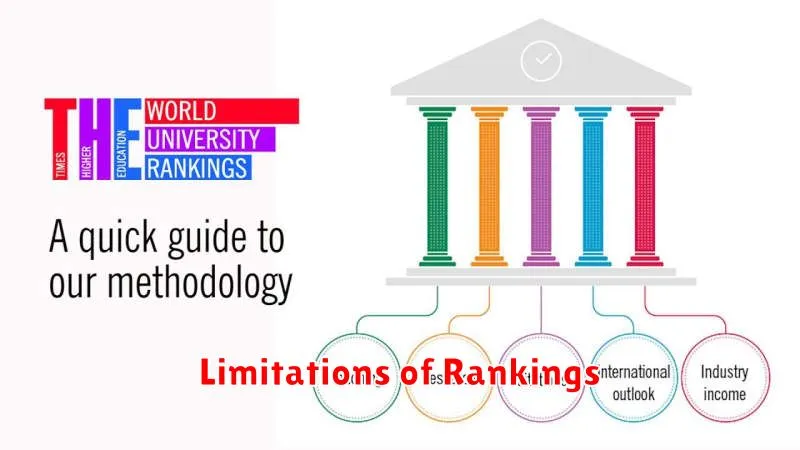
University rankings, while offering a seemingly objective comparison, possess inherent limitations that must be acknowledged. Methodologies vary significantly between ranking organizations, placing different weights on factors like research output, student-faculty ratio, and internationalization. This lack of standardization makes direct comparisons challenging.
Furthermore, rankings often oversimplify the complex nature of higher education. They may not capture the unique strengths of specialized programs or the specific learning environment of an institution. A high overall ranking doesn’t necessarily guarantee excellence in a particular field of study.
Data collection can also be a source of bias. Self-reported data by universities, while common, may be subject to manipulation. Additionally, some rankings rely heavily on reputation surveys, which can be influenced by pre-existing perceptions and brand recognition rather than objective measures of quality.
Finally, rankings often fail to address issues of equity and access. They may inadvertently prioritize institutions with greater resources, potentially overlooking institutions that excel in serving underrepresented student populations or providing innovative teaching approaches with limited funding.
How to Use Rankings in Decision Making
University rankings can be a helpful tool in the decision-making process, but they should not be the sole factor. It’s crucial to use them in conjunction with other research and personal reflection.
Identify Your Priorities: Before consulting rankings, determine what is most important to you in a university experience. Are you focused on a specific program, research opportunities, location, or campus culture?
Look Beyond the Overall Rank: Explore rankings that focus on specific areas like academic departments, student satisfaction, or career outcomes. These specialized rankings can offer more targeted insights.
Consider the Methodology: Understand how the rankings are calculated. Different ranking organizations use different metrics, and some may weigh certain factors more heavily than others. This can significantly influence the results.
Visit and Research: Rankings provide a starting point, but nothing replaces a campus visit and thorough independent research. Talk to current students, attend online information sessions, and delve deeper into programs of interest.
